Importance of Early Childhood Education in Nepal: Building a Strong Foundation for Children
Early education allows children to gain basic knowledge about things like numbers, the alphabet, different colours, shapes, and language

Importance of Early Childhood Education in Nepal: Building a Strong Foundation for Children
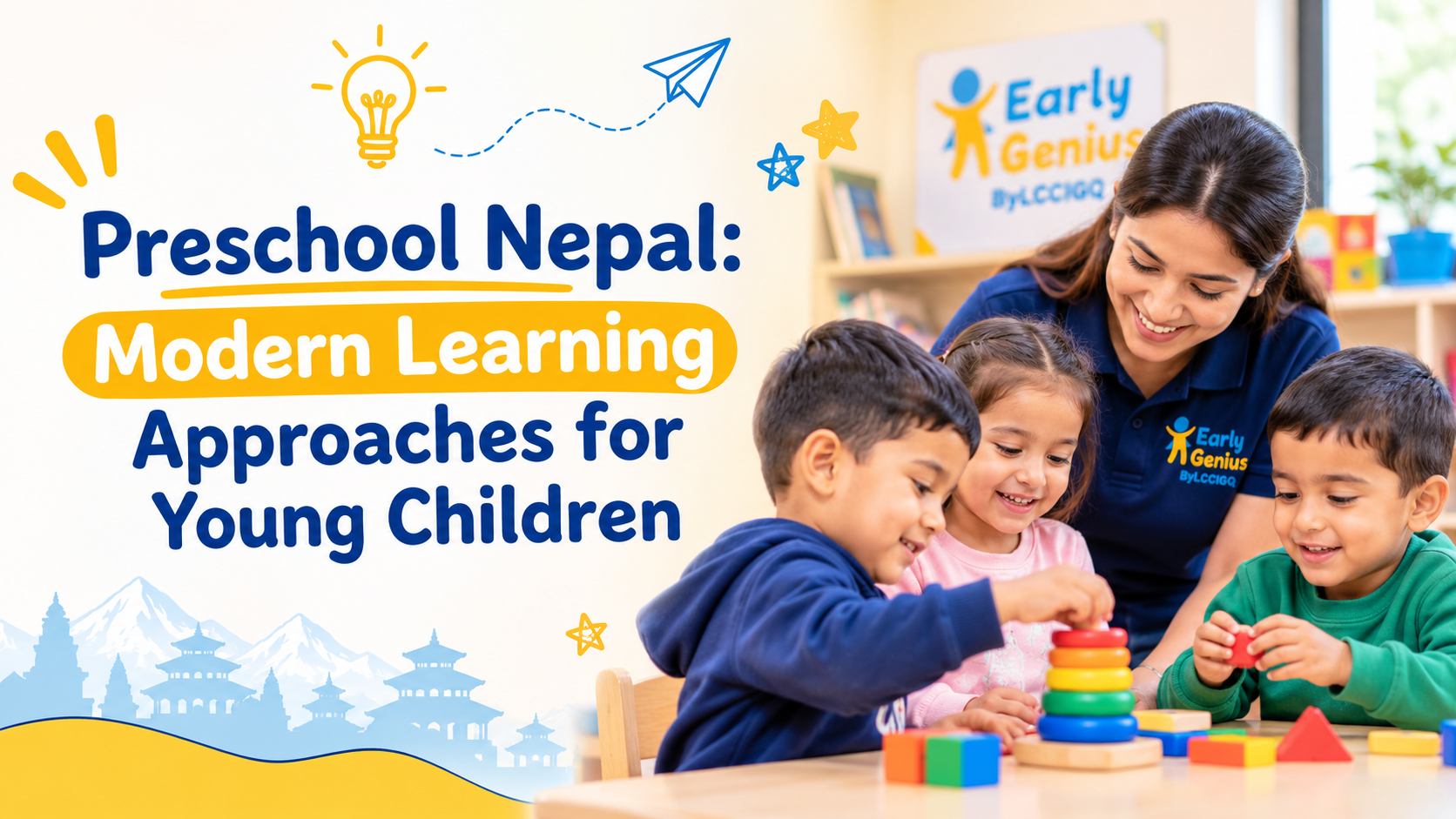
Early childhood is an important stage in a child's life. During these early years, children develop the basic skills, knowledge, and behaviours that support their future learning. Quality early childhood education helps children explore the world, communicate with others, and develop confidence.
In Nepal, awareness of early childhood education is growing as more schools and families recognise the importance of providing children with a positive learning environment. A well-planned learning programme can support children's overall development and prepare them for the next stage of education.
1. Creates an Effective Learning Base
Early education allows children to gain basic knowledge about things like numbers, the alphabet, different colours, shapes, and language. In doing so, kids can develop basic literacy and numeracy skills.
The learning process also fosters inquisitiveness in children and teaches them classroom norms. The knowledge thus acquired smooths the transition into school.
2. Enhances Social Interaction and Communication Skills
Children learn how to interact with adults and their peers and acquire essential social skills. Playing games together, recounting stories, playing roles, and discussing different topics provides children with an opportunity to communicate and express their opinions.
3. Promotes Originality and Independent Thought
From the beginning, toddlers show curiosity and willingness to learn about different things and concepts. Involving children in creative activities such as painting, drawing, or playing music aids them in expressing their emotions and thoughts.
Such activities help kids to think outside the box and find solutions on their own. The more they gain experience in being independent, the more confident they become.
4. Fosters Emotional and Physical Growth
Preschool education teaches kids to understand their emotions and act positively. Day-to-day contact with adults allows children to express feelings, learn patience, and create self-confidence.
In addition, engaging in physical exercises such as dancing and playing games help in enhance motor skills.
5. Makes Education Fun and Engaging
Education is more effective when students participate in the learning process. Learning becomes quite interesting and useful when teachers use play-based and activity-based teaching strategies.
For instance, instead of just talking about numbers, teachers can teach counting by getting students to count objects. They can teach language through storytelling and shapes by getting the children to do various activities.
6. Assists Schools and Educators
Effective early childhood education depends on the availability of qualified educators, relevant teaching materials, and well-prepared programs. Teachers require enough guidance and techniques to make learning appealing to learners.
Schools should use programming that ensures that the teaching materials are available to educators, enough teacher training is provided, and ongoing support is accessible.
.
How Early Genius Supports Early Childhood Education
Early Genius provides integrated early years learning solutions to support schools, teachers, and young learners. Its offerings include the Oxford Advantage curriculum, CHAMPS pedagogy, professional development, and learning resource kits.
Through structured learning resources and teacher support, Early Genius aims to help schools create engaging classroom experiences and support children's overall development.
Schools looking to strengthen their early learning programmes can explore the educational solutions offered by Early Genius.
Conclusion
Early childhood education plays an important role in developing the skills children need for future learning and everyday life. It supports communication, creativity, confidence, social interaction, and physical development.
By providing a structured curriculum, interactive teaching methods, and suitable learning resources, schools in Nepal can create a positive foundation for young learners. Investing in quality early childhood education is an important step towards supporting children's long-term growth and development.
Frequently Asked Questions
1. What is early childhood education?
It means the provision of various learning experiences to help the little ones during their formative years.
2. What is the significance of early childhood education in Nepal?
It plays a primary role in the development of fundamental skills and gives children a chance to learn some basic things before they start school.
3. What are the major advantages of early childhood education?
It promotes creativity, communication, self-confidence, independent thinking, social skills, and preliminary academic development.
4. What methods of education may be effective with kids?
The use of games, learning through activities, storytelling, creative arts, and practical experiences may be productive.
5. What can be done in schools to enhance early childhood education?
A systematic curriculum should be adopted, and teachers must undergo training.